Timeless look… Amazing feel… Excellent performance…
INSTAGRAM




المقال: The Masterpiece Was Always Meant for You
 Images © Future Force Golf
Equipment catalogs run thin. Flagship releases come late — or not at all. The best that engineering has to offer is almost always engineered for someone else first. Left-handed players learn to adapt. They search. They wait.
Not this time.
The Michelangelo Left-Handed 3D Driver is not an afterthought. It is not a mirror of something designed with you as a secondary consideration. It is the same masterpiece — conceived with the same obsession, built with the same aerospace-grade materials, limited in the same way — now made exactly for how you swing.
When Future Force named this driver after Michelangelo, it was not a marketing gesture. It was a declaration of intent.
Michelangelo the artist believed that the sculpture already existed inside the marble. That his role was simply to remove what didn't belong. At Future Force, the philosophy runs parallel: every millimeter of the Michelangelo driver exists for a reason. Nothing is decorative. Nothing is accidental. Every curve, every internal geometry, every material choice was arrived at after thousands of simulations and refinements — the result of a process more akin to sculpture than to manufacturing.
The Michelangelo is not produced. It is created.
 Images © Future Force Golf
Metal 3D printing changes what a driver can be at a fundamental level.
Conventional driver heads — whether cast or welded — are constrained by what tooling can reach and what seams can hold. Internal geometry is always a compromise. 3D printing removes that constraint entirely. The internal framework of the Michelangelo is formed layer by layer, cell by cell, from aerospace-grade titanium — a structure that no conventional method could produce.
The result is a head that functions like an architectural truss. Weight sits precisely where physics demands it. Energy travels through the head with minimal loss. Torsional resistance is exceptional — not because of mass, but because of geometry.
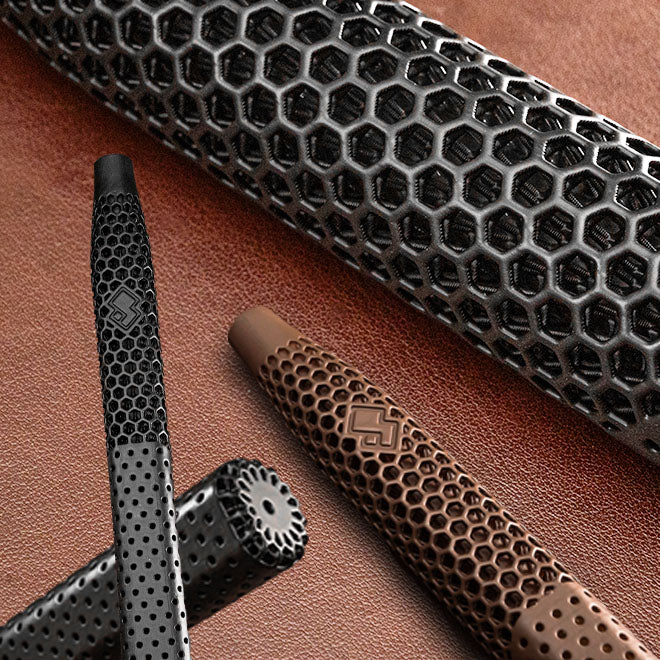
The honeycomb crown tells you everything before you even swing. That open-cell structure isn't aesthetic confidence; it's engineering honesty. It concentrates energy flow, fine-tunes aerodynamics through the downswing, and contributes to the acceleration that defines impact. It also happens to look like nothing else in golf.
Beneath the face, four inertial boost points are positioned around the inner perimeter of the sweet spot — each one designed to stabilize the head in the milliseconds after contact. The effect is a ball that flies with more consistency than its impact point alone would suggest. Forgiveness, here, is structural.
The face itself uses variable thickness technology: ultra-thin at the center, reinforced at the perimeter. The sweet spot is as wide as the engineering allows. And to achieve optimal vibration dampening alongside maximum energy return, cobalt-chromium alloy reinforcement zones are 3D-printed directly into the structure — a material specification drawn from aerospace, applied to the tee box.

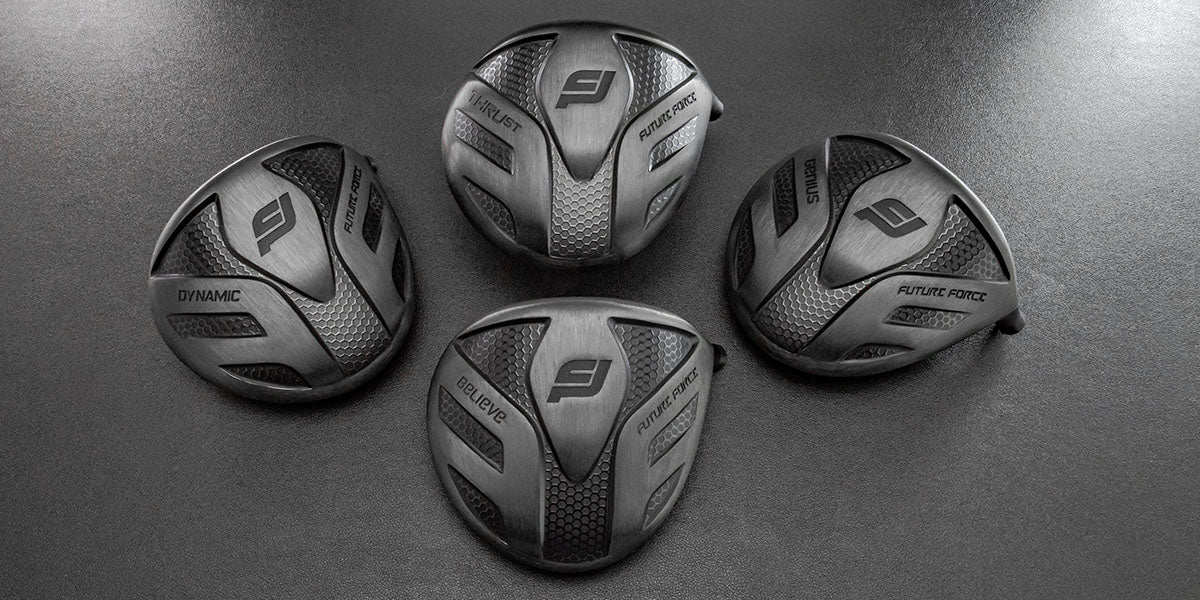
DISCOVER|Four Drivers. Four Inner Souls.
Why Future Force Created Four Different Drivers Four driver heads. Four COR profiles. Four CNC face architectures. Discover how Future Force designs drivers for different swing types, distances, an...
قراءة المزيد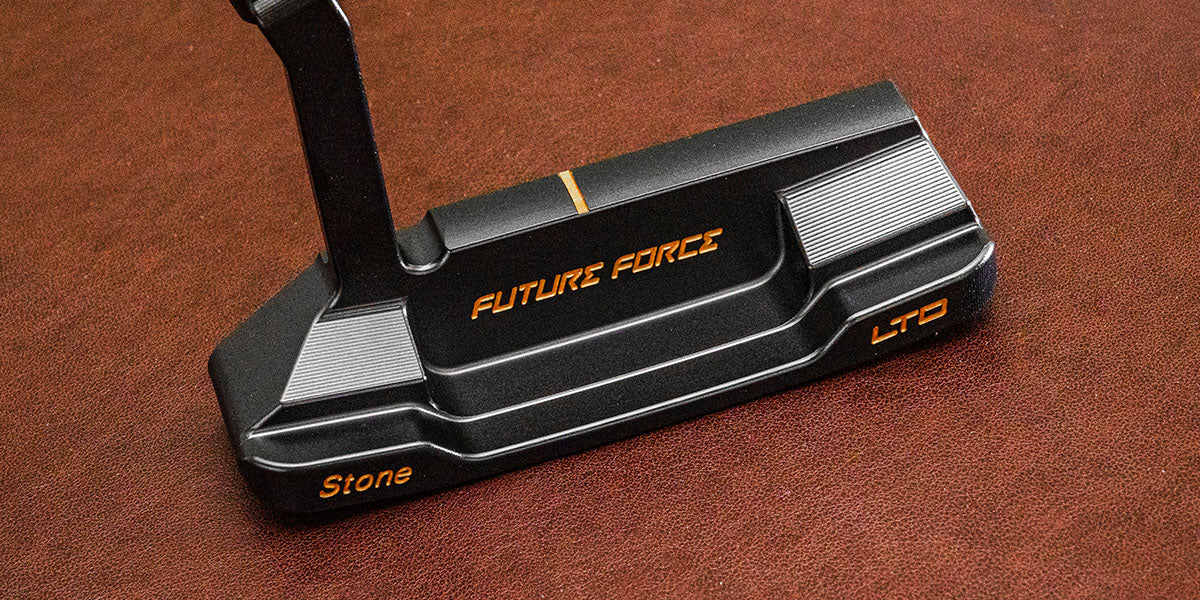
FUTURE FORCE Black Stone – SUS303 LTD Putter
Future Force Black Stone SUS303 LTD – Japanese Steel CNC Blade Putter Crafted from Japanese SUS303 stainless steel and sculpted by full 5-axis CNC, the Black Stone LTD blends classic Japanese feel ...
قراءة المزيد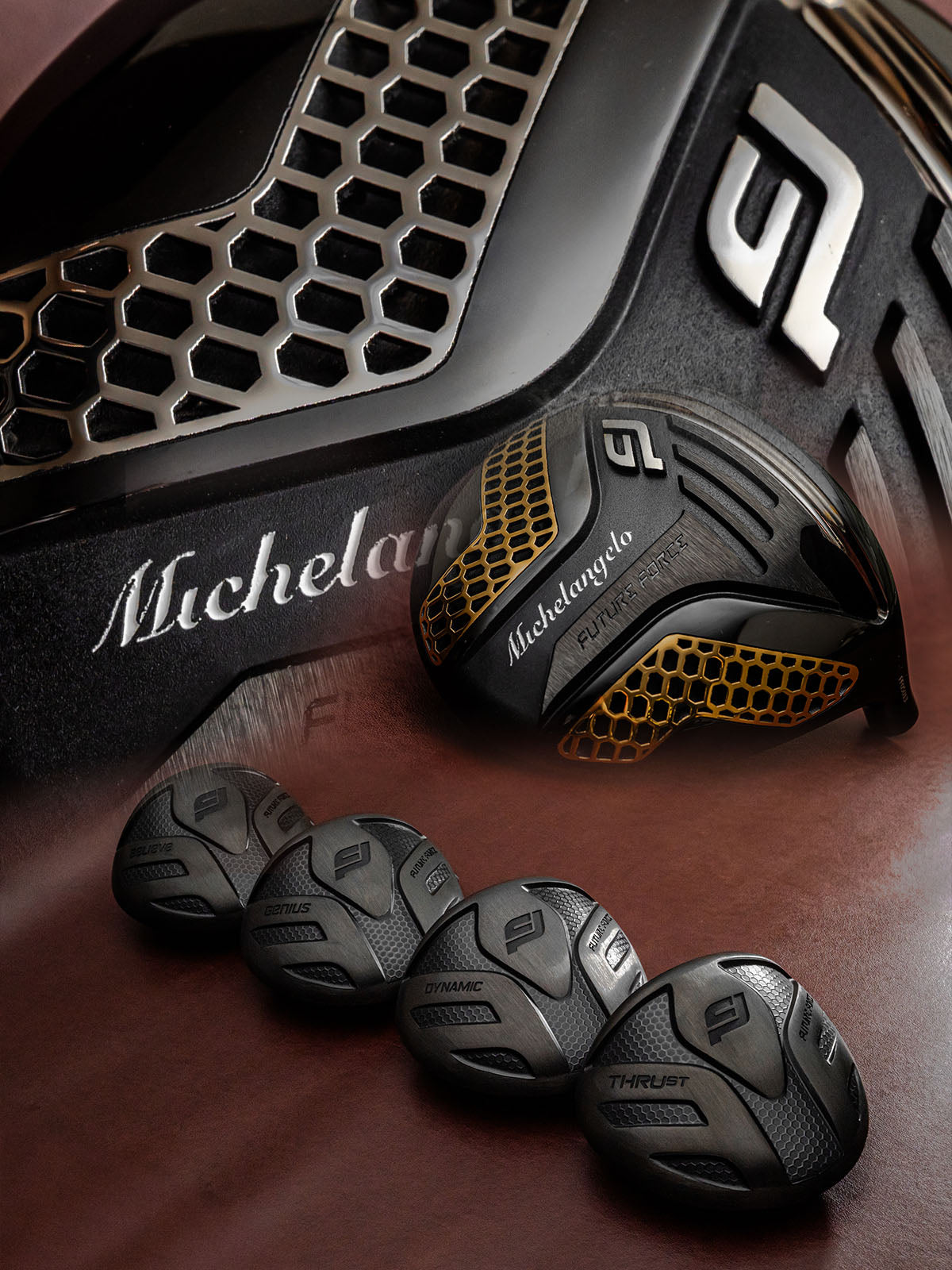


Future is NOW

Club Heads
Future Force Golf
Future Force represents the golf heads series within our brand. Initially, our plan was to launch the golf heads series first. However, our commitment to ensuring that every product in our brand exudes the highest quality and performance led us to extensive research and repeated redesigns.
Golf shafts
Future Flex Golf
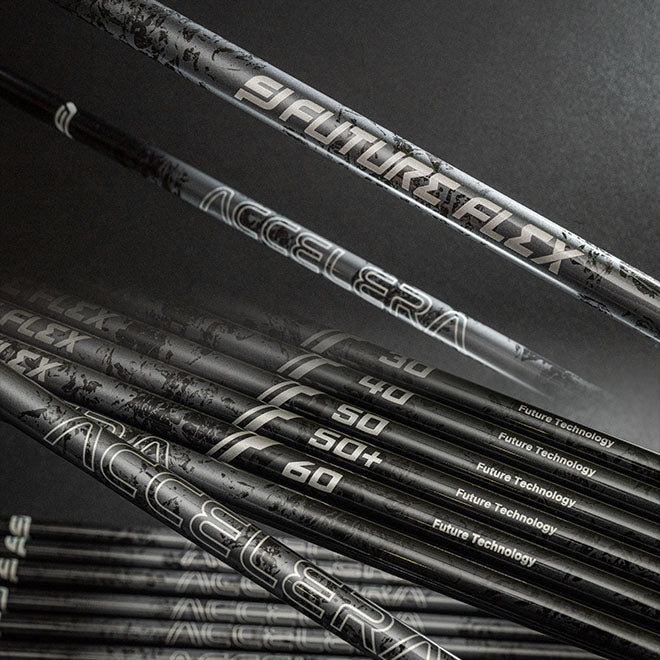
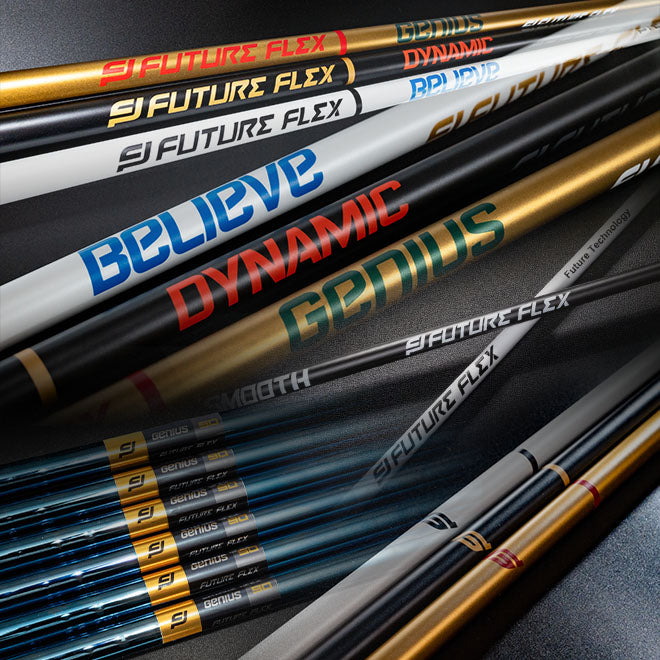
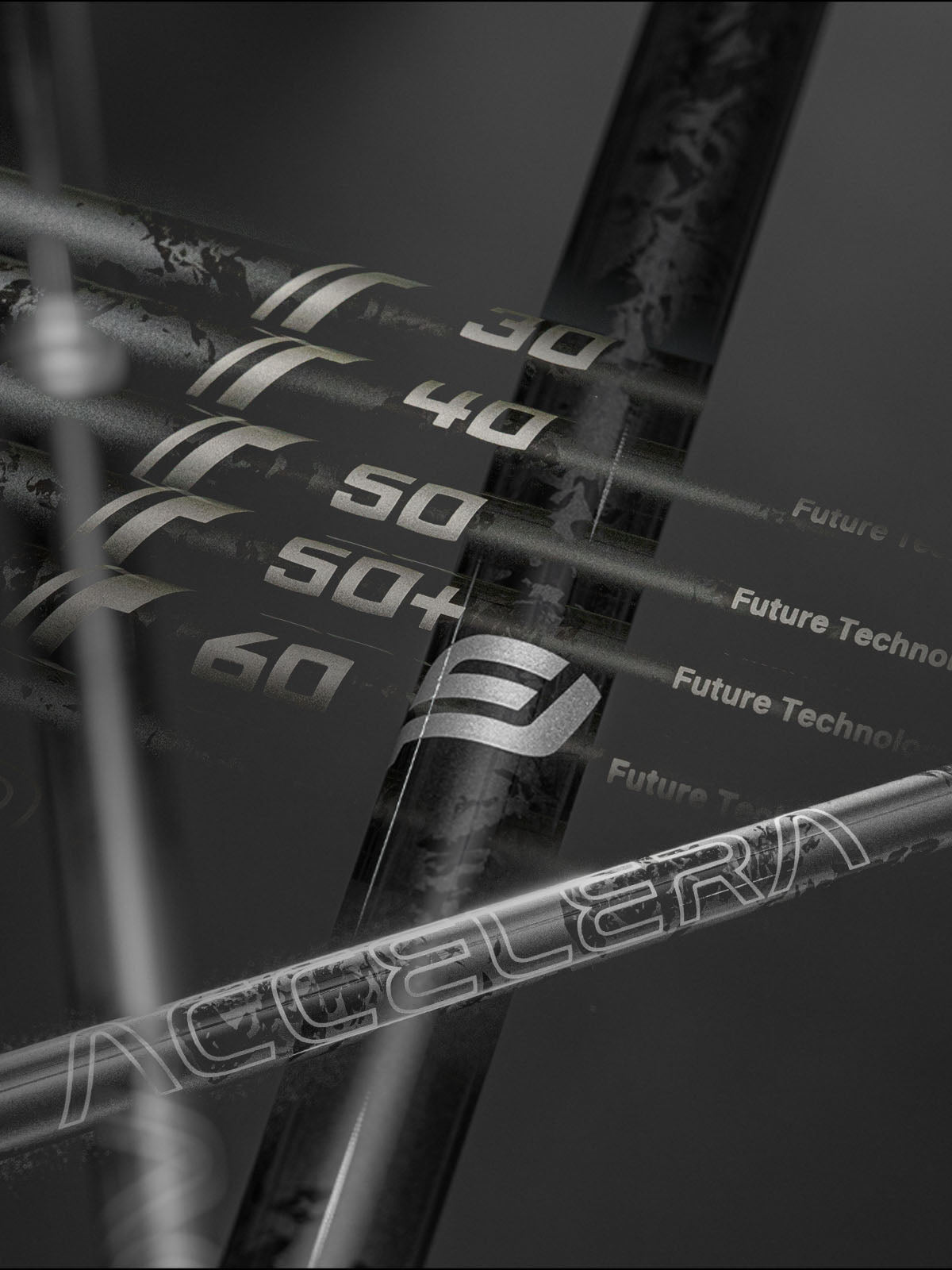
Due to the limitations of current automatic detection technology for golf club shafts, our brand, Future Flex, was created to address these issues and provide a better experience for golfers.Founded in the UK, with a design team consisting of professionals from around the world, dedicated to developing cross-generational technology for golf shafts.
Golf Grips
Itʻs Point 8
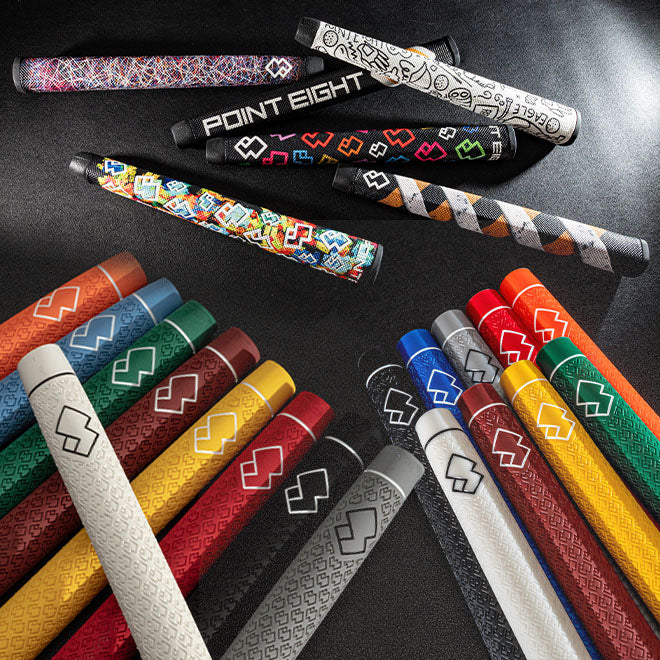
At Point 8, we craft golf grips that redefine excellence. Engineered with premium compound TPE material, our grips deliver unmatched durability, comfort, and control—ensuring every swing is precise and powerful. Designed to be versatile, professional, and stylish, they not only enhance your performance but also reflect your unique personality on the course. While our commitment to quality may come at a higher production cost, we never compromise on performance. At Point 8, we believe in excellence, not shortcuts.
